

Choosing between lingual braces vs clear aligners comes down to one question: which hidden treatment is right for you, your bite, and your daily habits? Both options straighten teeth without announcing themselves to the world. At Gross Orthodontics, Dr. Amanda Gross helps children, teens, and adults compare the two and find your perfect fit.
What Are Lingual Braces and Clear Aligners?
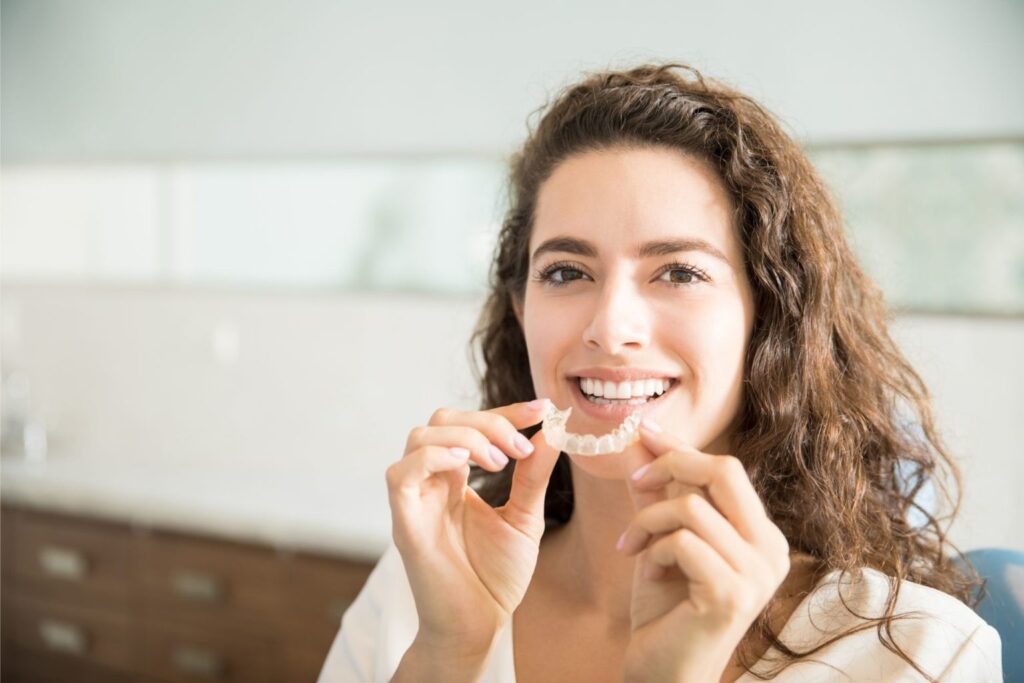
Lingual braces are fixed brackets and wires bonded to the tongue side of your teeth, hiding them completely from the front. At Gross Orthodontics we use InBrace, a lingual system custom-built for the back surfaces of your teeth. Clear aligners are removable, custom-molded plastic trays worn 20 to 22 hours a day and switched for a fresh set on a regular schedule. Both correct alignment discreetly.
That fresh set usually arrives every one to two weeks, and each tray nudges your teeth a little closer to the position mapped out in advance.
The end goal is the same. Straighter teeth, a healthier bite, and very little visual impact while you get there.
The big difference is control. Lingual braces stay put and keep working around the clock, with no decisions required from you. Clear aligners hand you the responsibility, since they only move teeth while they’re actually in your mouth.
Both start the same way, too. Dr. Gross takes digital scans using intraoral scanning technology, reviews your bite and facial structure, then builds a personalized treatment plan around what your teeth actually need.
Here’s the short version:
- Lingual braces: fixed, hidden behind the teeth, always active
- Clear aligners: removable, nearly invisible, compliance-dependent
- Both: custom-made from digital records and designed to work quietly in the background
How Each Hidden Treatment Moves Your Teeth
Lingual braces move teeth through custom brackets bonded behind each tooth, with an archwire applying steady, continuous pressure that Dr. Gross adjusts every six to eight weeks. Clear aligners move teeth in stages, using a series of trays that each apply gentle, planned pressure. Both methods follow a digital blueprint mapped out before treatment begins.
How Do Lingual Braces Move Teeth?
- Digital scans and photos capture your bite in detail.
- Custom InBrace brackets are fabricated to match the back surfaces of your teeth.
- Indirect bonding places the brackets accurately in one visit.
- Archwire changes and adjustments happen every six to eight weeks.
- Treatment typically runs 12 to 24 months, depending on complexity.
How Do Clear Aligners Work?
- An intraoral scan builds a 3D model of your teeth.
- Dr. Gross designs the full sequence of movements digitally.
- You see a 3D simulation of your projected outcome before starting.
- Small tooth-colored attachments may be bonded to help grip certain teeth.
- Most cases run 12 to 24 months, depending on complexity and consistent wear.
Lingual braces do their best work when teeth need significant rotation or when a deep bite has to be opened. Because they’re fixed, nothing depends on remembering to put trays back in after lunch.
Aligners work beautifully when the movements are more straightforward and you’re consistent. Twenty to 22 hours daily isn’t a suggestion. It’s the whole mechanism.
Benefits of Each Discreet Option
Both treatments protect your appearance during treatment, which matters a lot for working adults, college students, and older teens in the middle of yearbook photos.
What Do InBrace Lingual Braces Offer?
- Completely invisible from the front, even in close conversation
- No compliance required, since they work 24 hours a day
- Strong performance on complex crowding, rotations, and bite correction
- No visible attachments on the front surfaces of your teeth
- Steady progress without depending on your schedule or memory
Lingual braces give you something aligners can’t quite match: total invisibility from every angle, with zero attachments showing on your front teeth. For anyone who presents, performs, or photographs frequently, that’s a real advantage. There’s also a quieter benefit that patients mention months in, which is never having to think about the appliance at all.
What Do Clear Aligners Offer?
- Removable for meals, so no food restrictions
- Smooth plastic with no brackets or wires to irritate your cheeks
- Easier brushing and flossing, which lowers decay and gum inflammation risk
- Typically fewer in-office visits across the course of treatment
- A 3D preview of your projected outcome before you commit
Aligners give you the cleanest hygiene routine of any orthodontic option. You take them out, brush normally, floss normally, and put them back. For anyone with a history of gum inflammation or a packed schedule that makes frequent visits difficult, that combination carries real weight.
Lingual Braces vs Clear Aligners: Side-by-Side Comparison
Seeing both options next to each other usually clears things up fast. Here’s how they compare across the factors patients ask about most.
A few points worth expanding on.
Esthetics. Lingual braces sit entirely behind your teeth, so nobody sees them, period. Aligners are close to invisible, though the attachments some cases require can catch the light. If your priority is invisible orthodontics that holds up in photos, on video calls, and in close conversation across a conference table, lingual braces still set the standard. Clear braces sit somewhere in between, since tooth-colored brackets are subtle but still on the front.
Comfort and speech. Your tongue needs time to adapt to brackets on the back surfaces. Most people notice a slight lisp for the first couple of weeks, then stop thinking about it. Aligners feel smooth from day one, with a bit of tightness when you switch trays that usually fades within a day.
Hygiene. Cleaning around lingual brackets takes real effort and the right tools, including interdental brushes, a water flosser, and a few extra minutes at the sink each night. Aligners simply come out, so your existing routine barely changes.
Visits and scheduling. Lingual braces call for a check-in every six to eight weeks so Dr. Gross can change the archwire and confirm your teeth are tracking. Aligner visits tend to be spaced further apart, which suits people who travel for work or juggle a full family calendar.
Outcomes. When the case is selected correctly, both approaches deliver amazing results. That’s the part people underestimate. The appliance matters less than whether it matches your bite, and that judgment belongs in an exam chair rather than a search results page.
Who Is a Good Candidate for Each Option?
Not every bite works with every appliance. Dr. Amanda Gross, a board-certified orthodontist in El Paso, reviews your records, bite, and daily routine before recommending a direction.
Lingual braces tend to fit best when:
- You have significant crowding, rotated teeth, or a deep bite
- You want a treatment that’s invisible from every angle
- You’d rather not manage removable trays
- Compliance would realistically be a challenge (busy teens, frequent travelers)
- Athletics or music make a removable appliance impractical
Clear aligners tend to fit best when:
- Your crowding or spacing is mild to moderate
- You’re disciplined about wearing trays 20 to 22 hours daily
- You speak publicly, teach, sing, or present regularly
- You want to eat without restrictions
- Your gums are healthy and your hygiene is consistent
Some situations rule lingual braces out. An extreme overbite is the main one, because the bite puts pressure on brackets bonded to the back surfaces and they’re more likely to pop off. That’s a conversation to have at your exam rather than a reason to write the option off yourself.
Aligners have limits too. They require healthy gum tissue, good home care, and genuine consistency. If trays sit in a case on your desk, teeth don’t move.
Age plays a smaller role than most people assume. Adults, older teens, and even some younger patients with fully erupted teeth can be candidates for either option once growth and eruption patterns are accounted for.
That’s why the evaluation matters more than the marketing. Dr. Gross looks at your bite mechanics and your lifestyle together, then explains the tradeoffs so you can be one of the active players in your treatment.
Frequently Asked Questions About Hidden Orthodontic Treatment
Are lingual braces really invisible?
Yes. Lingual braces bond to the tongue side of your teeth, so they’re hidden from every front-facing angle, including photos and close conversation. Someone would essentially have to look inside your mouth from below to notice them. This makes them the most discreet fixed option available.
Do lingual braces affect speech, and for how long?
Most people notice a slight lisp during the first one to two weeks as the tongue adapts to the brackets. Reading out loud for a few minutes each day speeds up the adjustment considerably. By the end of the first month, the vast majority of patients speak normally without thinking about it.
Which works faster: lingual braces or clear aligners?
It depends entirely on your case, not the appliance. Most treatments run 12 to 24 months either way. Straightforward crowding or spacing can finish toward the shorter end with clear aligners, while complex rotations, deep bites, and cases needing significant bite correction typically move more predictably with lingual braces.
Are lingual braces more uncomfortable than clear aligners?
Both cause mild soreness when teeth start moving, which is normal and temporary. Lingual braces add an adjustment period for your tongue, since brackets sit against a sensitive surface. Orthodontic wax helps during the first couple of weeks. Aligners feel smoother overall, with pressure that peaks for a day or two after each tray change.
Can I switch from clear aligners to lingual braces mid-treatment?
In many cases, yes. If teeth aren’t tracking as planned or the case turns out to need more control than trays can provide, Dr. Gross can transition you to a fixed appliance. New records and a revised personalized treatment plan are part of that change, and she’ll walk you through what shifts before anything moves forward.
Do both options require a retainer afterward?
Yes, and this part isn’t optional. Teeth have memory and will drift back toward their original positions without retention. Whether you finish with lingual braces or clear aligners, Dr. Gross prescribes retainers and a wear schedule to protect the alignment you worked for.
Find Out Which One Fits Your Smile
Reading about both options only gets you so far. The answer comes from an exam, because it depends on how your teeth are actually positioned and how you live day to day.
Schedule your free consultation at Gross Orthodontics and Dr. Gross will scan your teeth, walk you through what each option would look like for your case, and tell you honestly if one of them isn’t a good fit. No obligation, and nothing gets started that day.